Hair Loss In Men
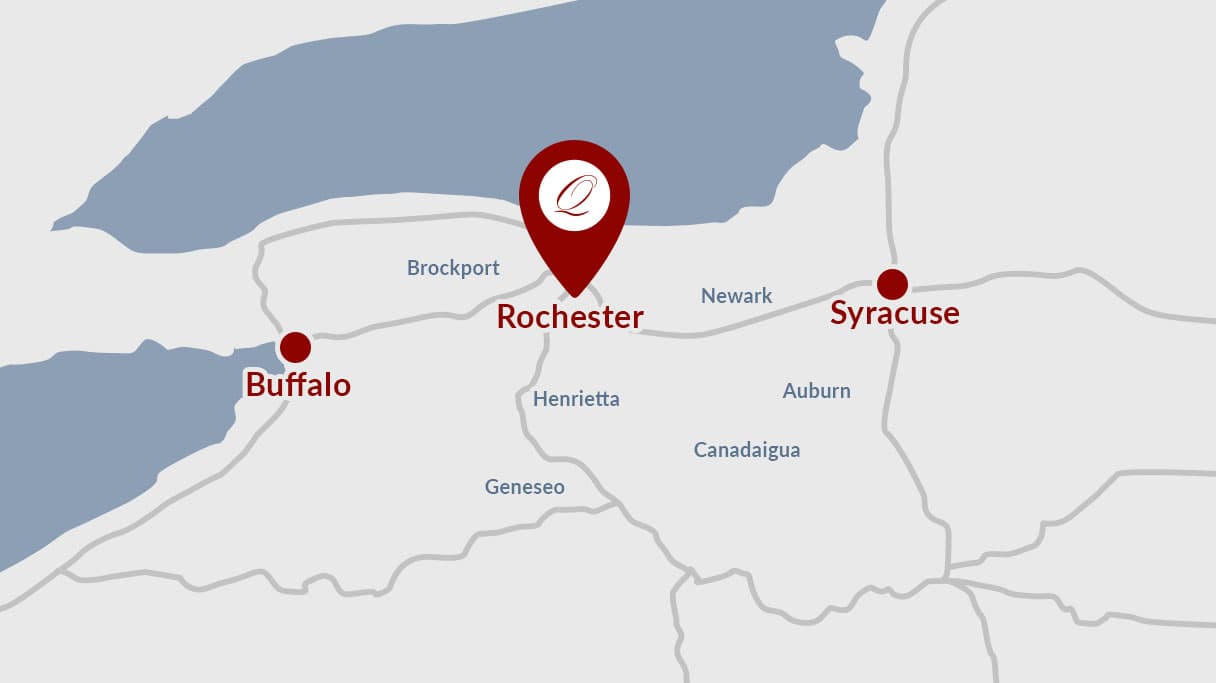
By the age of 40, some degree of hair loss is evident in nearly 50% of all men; it’s what brings men from Syracuse, Buffalo, and throughout the region to our Rochester, NY, clinic. Although hair loss is socially acceptable, it is not desirable. Dating far back in history, baldness has been a part of the aging process that many men fear. Before Rogaine®, hair transplants, and hair additions, men coped in various ways by using ointments or adapting their hairstyles. Hair loss is an age-old condition, but understanding the cause of the male pattern hair loss (MPHL) may better indicate exactly why it presently has no cure.
At the Quatela Center for Hair Restoration, we help men and women from throughout New York and across the nation restore their hair. Request a consultation with one of our hair restoration experts or call our office at
(585) 244-0323 to schedule an appointment.
Normal Hair Growth Cycle
In order to determine an effective solution for your hair loss, it’s important to understand how hair grows. Normal hair growth constantly cycles through the following phases:
- Anagen, the growth phase, lasts 2 to 8 years. About 90% of the hairs are in this phase at one time.
- Catagen is a brief period of only about 2 to 4 weeks where the hair begins to separate from the follicle.
- Telogen, the resting phase, is when metabolic activity ceases for about 2 to 4 months, then the hair falls out and the cycle repeats.
For details, visit About Hair Growth.
What Is Male Pattern Hair Loss?
Male pattern hair loss (MPHL) is the most common type of hair loss in men; it often leads to male pattern baldness (MPB), technically called androgenetic alopecia. Approximately 35 million men in the United States are affected by androgenic alopecia. The term “androgenic” can be broken down into two parts:
- “Andro” refers to the androgens testosterone and dihydrotestosterone (DHT) necessary to produce male pattern hair loss.
- “Genetic” refers to the inherited gene necessary for male pattern hair loss to occur.
Classifications of Hair Loss
There are 7 stages of hair loss classification used to describe most people’s patterns, called the Norwood Scale. The Norwood Scale is a system used to classify a person’s pattern of hair loss. Our hair restoration specialists use the Norwood Scale when creating hair loss treatment plans for our patients.
Renowned Hair Restoration Specialists
Vito C. Quatela, M.D., FACS
Double Board-Certified Facial Plastic Surgeon
Dr. Quatela is recognized worldwide for his expertise in facial rejuvenation and has performed hair transplant procedures for more than 30 years. He is a diplomate of the American Board of Hair Restoration Surgery—the only certification recognized by the International Society of Hair Restoration Surgery.
Heather Lee, M.D.
Double Board-Certified Facial Plastic Surgeon
Dr. Lee completed fellowship training in advanced hair restoration methods under Dr. Quatela. A specialist in procedures of the face and head, Dr. Lee is known for the attention to detail and meticulous technique she uses to consistently produce natural-looking results.
Dr. Alex Montague, M.D.
Double Board-Certified Facial Plastic Surgeon
Known for his exemplary skills in both technique and patient care, Dr. Montague is a double board-certified facial plastic surgeon and otolaryngologist-head and neck surgeon. He specializes in cosmetic and functional facial surgery and injectable treatments.
What Causes Male Pattern Baldness?
Alopecia is an inherited condition and the gene can be inherited from either the mother or father’s side. Susceptible hairs have follicles genetically coded to die when exposed to the androgen DHT. While most people have a combination of susceptible and non-susceptible hairs, men with male pattern baldness have more of these susceptible follicles—usually on the top and front of the head.
How Does Male Pattern Hair Loss Affect Hair Growth?
MPHL affects the natural hair growth cycle in multiple ways:
- The percentage of hairs in the growth phase and the duration of the growth phase diminish resulting in shorter hairs.
- More hairs are in the resting state at one time. These hairs are much more likely to fall out with the daily trauma of combing and washing.
- The hair shafts become progressively miniaturized, which means they are smaller in diameter and length. All the hairs in an affected area may eventually (but not necessarily) become miniaturized, eventually leaving the affected area of the scalp covered with fine (vellus) hair. Hair pigment (color) production is also terminated with miniaturization so the fine hair becomes lighter in color. The lighter-colored miniaturized hairs cause the area to first appear thin.
Other Types of Hair Loss
While androgenetic alopecia is the most common type of hair loss in men, it is important to rule out the following other conditions before choosing a hair restoration treatment:
- Alopecia areata creates “patchy” hair loss, often in small circular areas in different parts of the scalp. It is generally thought to be an autoimmune disorder.
- Alopecia totalis an advanced form of alopecia areata that produces total hair loss of the scalp.
- Alopecia universalis is also an advanced form of alopecia areata; however, it causes hair loss throughout the entire body.
- Traction alopecia is hair loss caused by physical stress and tension on the hair such as prolonged use of hair weaving, corn rows, etc. When done too tightly on weak hair, these hairstyles can cause permanent hair loss.
- Telogen effluvium is usually temporary hair loss. Causes include physical or emotional stress, thyroid abnormalities, medications, and normal hormonal changes associated with females such as pregnancy.
- Anagen effluvium is generally due to internally administered medications, such as chemotherapy agents, that poison growing hair follicles.
Hair Loss Treatment Options for Men
At the Quatela Center for Hair Restoration, our team of experts specialize in both surgical and nonsurgical solutions to address hair loss in men.
The hair restoration expertise of Drs. Vito C. Quatela, Heather Lee, and Alex Montague attracts patients from throughout New York and across the nation. To find a solution to your hair loss, request a consultation using the online form to meet with one of the surgeons at the Quatela Center for Hair Restoration. Or call our office at
(585) 244-0323 to schedule an appointment.
Your Destination for Hair Restoration
The Quatela Center for Hair Restoration is a leading name in hair restoration across upstate New York. Men and women frequently travel from outside the area—even internationally—to enjoy our refined expertise in creating natural-looking hair transplant results.
Traveling From Buffalo
Traveling From Syracuse